
Herbal Powders

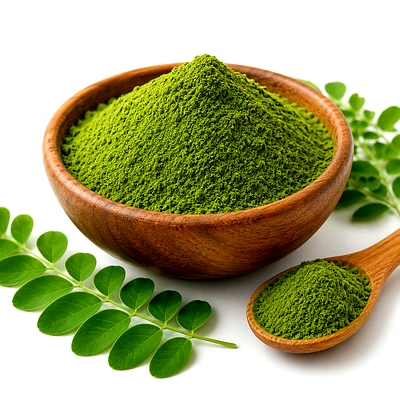
Dehydrated Moringa Powder Fine Green 80–100 Mesh Nutraceutical Ingredient For Health And Food Applications
dehydrated moringa powder for nutraceutical and food applications
Dehydrated moringa powder is a fine green leaf powder used in nutraceuticals, supplements, and food fortification. The fine 80–100 mesh grade ensures smooth incorporation into capsules, tablets, beverage mixes, and functional food blends. It provides a concentrated source of leaf-derived nutrients and standardizable particulate behavior for manufacturing.
Technical Specifications & Grading
- mesh: 80–100 mesh
- color: fine green leaf powder
- moisture: controlled low-moisture processing
- packaging: 25 kg lined bags, cartons
Bulk Supply & Logistics Terms
- MOQ: Commercial bulk volumes available upon request
- Lead Time: Scheduled based on volume and packaging
- Supply Capacity: Scalable monthly supply for repeat orders
- Packaging: 25 kg lined bags, cartons or bulk sacks
Botanical powder categories for formulation and processing
Herbal Powders Supplier supports nutraceutical manufacturers, formulation companies and ingredient distributors sourcing botanical powders for capsules, blends and food-processing applications. Buyers commonly evaluate botanical identity, assay consistency and contamination controls before approving supply.
Supply categories may include single-herb powders, botanical blends and processing-grade plant materials prepared for commercial manufacturing requirements.
Selection factors: assay consistency and contamination control
Commercial botanical sourcing focuses on measurable active properties, traceability and quality-control support across production batches. Procurement checkpoints commonly include:
- active constituent consistency aligned to formulation targets
- heavy-metal, pesticide and microbiological screening availability
- botanical origin traceability and batch-level documentation support
Processing compatibility and particle-size coordination
Particle-size selection and milling specifications influence blending behaviour, dissolution characteristics and production efficiency during formulation.
Sieve specifications, blending suitability and handling formats
Commercial supply may be coordinated according to blending systems, filling processes and handling requirements specified during procurement review.
- particle-size options aligned to formulation and blending requirements
- industrial packing formats designed for storage and material handling
- sampling support for validation and formulation testing programs
Commercial documentation and procurement support
Accurate quotations depend on defined assay expectations, testing scope and shipment requirements. Buyers should include specification targets and procurement schedules during RFQ discussions.
What minimum order quantities apply for herbal powder supply?
MOQ levels vary according to botanical type, processing specifications and packaging format. Buyers should specify expected order volume and preferred packing configuration during quotation requests.
How is pricing determined for botanical powder procurement?
Pricing generally reflects botanical sourcing, assay expectations, testing scope and procurement volume. Long-term sourcing schedules may support more stable commercial pricing.
Are testing reports and COAs available for herbal powders?
Certificate-of-analysis documentation and contamination-screening reports can be coordinated according to buyer quality-control and compliance requirements.
How are packaging and shipment schedules managed for herbal powders?
Shipment coordination is aligned with packaging preferences, sampling requirements and agreed procurement timelines confirmed during RFQ planning.
